Climate Resilience and Risk Management
CPChem conducts climate-specific scenario analyses to identify, assess, and manage climate-related risks and opportunities across its value chain.
These analyses evaluate key physical risks such as flooding, extreme heat, hurricanes, and water scarcity; and transition risks, including evolving public policy, regulatory developments, and market dynamics. The results are integrated into CPChem’s Enterprise Risk Management (ERM) framework, enabling the Company to systematically assess potential impacts, prioritize mitigation and adaptation actions, and embed climate considerations into strategic planning, capital allocation, and operational decision-making. Through this structured approach, CPChem enhances its ability to adapt to changing climate conditions, strengthen resilience across operations, and maintain long-term competitiveness in a transitioning global economy.
Insights from CPChem’s climate scenario analyses directly inform business and operational decisions across the enterprise. Results from physical climate risks including extreme heat, flooding, and water stress are integrated with enterprise processes to capture holistic resilience, such as design standards, hazards analysis, and emergency preparedness. Transition risk insights, including potential policy and market changes, are considered during strategic planning and technology evaluations. These efforts help CPChem assess efficiency improvements, fuel flexibility options, and other emissions reduction projects under a range of future scenarios. These applications ensure that climate related risks and opportunities are systematically incorporated into capital allocation, operational planning, and long term strategy.
In 2024, CPChem revisited its Climate Risk Assessment. Incorporating data from the latest IEA NZE scenario and other third-party sources aligned to IPCC RCP 7 and RCP 8.5, we utilized scenario-planning tools for our internal analysis of transition and physical risks. Results for 2024 identified risks consistent with our previous analyses. See the risks discussed in prior reports at the end of this report.
SDG #13, Climate Change

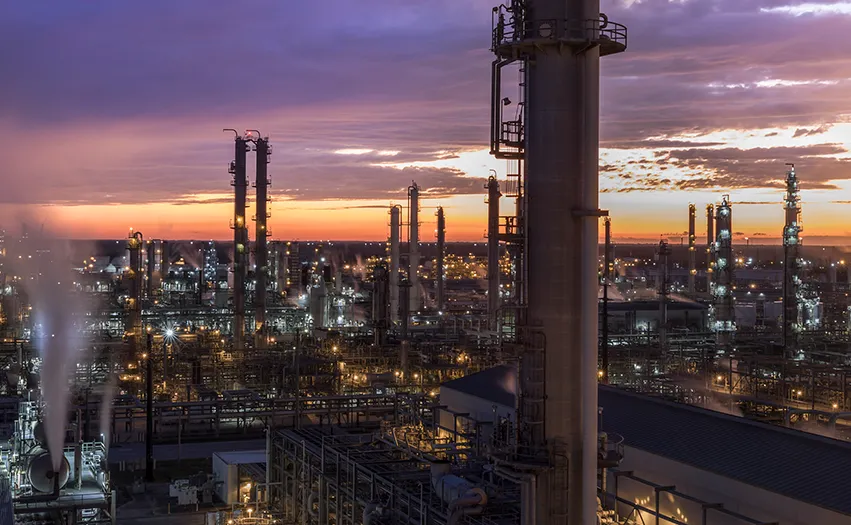
Advancing Lower-Emission Technology
In 2025, CPChem and Technip Energies began installation of a proprietary Low Emission Cracking Furnace in an existing olefins unit at the company’s Sweeny, Texas, facility. The lower-GHG emission design is expected to reduce fuel consumption and carbon dioxide emission intensity by approximately 30%.
Once operating, the Furnace is projected to improve efficiency through advanced heat recovery, electrification of a major compressor driver and a furnace capable of operating on hydrogen fuel. Together, we anticipate that these features will enable immediate GHG emissions reductions while supporting future pathways to reduce GHG emissions intensity as lower-carbon fuels become available.
Our company is focused on initiatives and projects that are cost effective and have a meaningful impact on lowering the intensity of GHG emissions generated by the production of the basic chemicals that society needs. Our collaboration with Technip Energies to deploy the proprietary Lower CO2 Emissions Cracking Furnace represents a meaningful step toward achieving our carbon intensity reduction goals.
Nature and Biodiversity
In 2025, CPChem completed its first Nature and Biodiversity Risk Assessment, underscoring the company’s commitment to managing risks and opportunities related to biodiversity and ecosystem services. The assessment provided an asset level evaluation of how CPChem facilities interact with surrounding natural systems, using geospatial data to assess local ecosystem condition, biodiversity importance, and facility resilience.
The assessment evaluated both potential impacts on biodiversity and dependence on ecosystem services, including water availability and natural flood mitigation functions. Results indicated that CPChem’s operations generally have a higher reliance on ecosystem services than it has direct impacts on those services. The assessment also considered potential operational risks associated with ecosystem service degradation.
These insights support CPChem’s ongoing risk management and planning efforts by helping identify locations where additional attention to biodiversity considerations may be appropriate. The findings complement existing sustainability and Operational Excellence programs, including established management practices related to air, water and community stewardship.